

Just the Name of Lord Hari
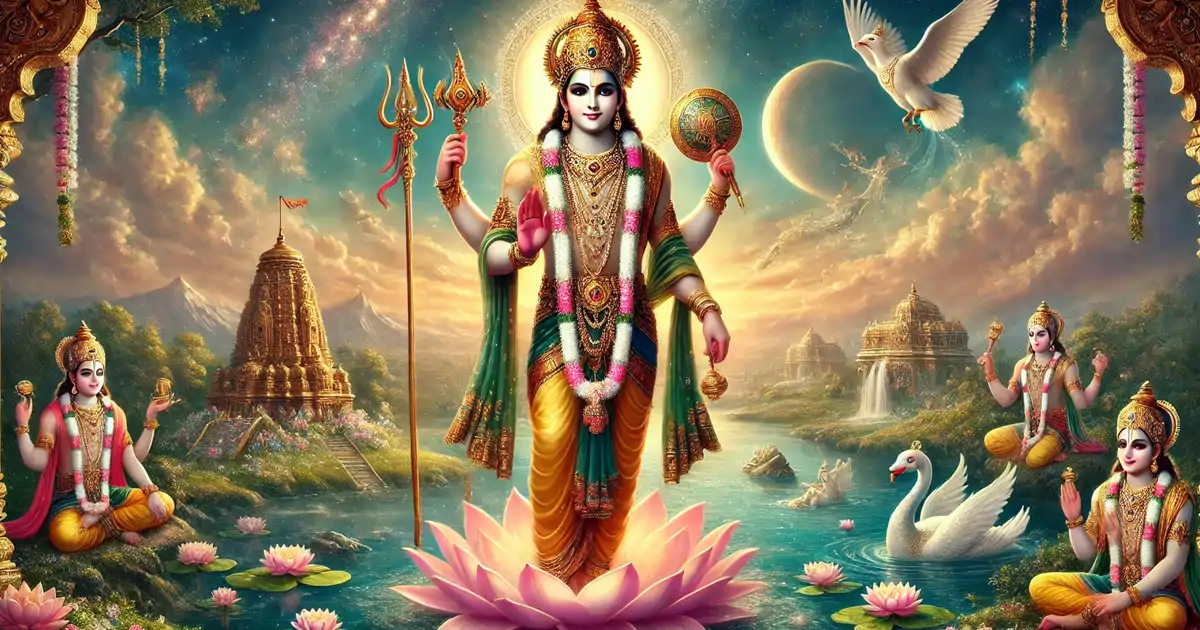
In Kaliyuga, Bhagavad Bhakti (devotion to the Lord), singing bhajans, and naama sankirtan (chanting or singing His name) are considered very important for attaining spiritual success:
Dhyan Krutey Yajan Yagyestretaayam Dwaparerchayan,
What one achieves through meditation in Satya Yuga, through sacrifices (yajnas) in Treta Yuga, and through worship (archana) in Dvapara Yuga, can be attained in Kali Yuga simply by chanting the name of Lord Keshava (Krishna).
Yadapnoti Tadapnoti Kalou Sankirtya Keshavam
Vishnupuran
“The consequences attained in Satyayuga through dhyana, idol worship in Dwapara are equivalent to that earned out of just chanting the name of the Lord.”
To communicate and convey this Vedic truth to all human beings, the Lord descended to this earth from time to time, and all such incidents are known to be the pastimes of the Lord. He also gave us the ocean of knowledge, the Bhagavad Gita. Every word in the Gita provides seamless knowledge to all jeevas existing in the world. The Lord agreed to be an ordinary sarathi (charioteer) in the episode of the Mahabharata. One can never easily understand the pastimes of the Lord in the Mahabharata.
He knew that Arjuna was totally depressed and an egoistic person. Arjuna tells the Lord, “Senyorubhayormadhye Rathm Sthapaya Mechyuta,” meaning, “Oh! Achyuta, take my chariot between the two armies.” He was ordering the Lord to position the chariot between the two armies, asserting his desire to take stock of the situation and look at the evil Duryodhana and his armies.
Filled with pride, Arjuna refers to Duryodhana and his armies as the evil side, “Durbudheryudhey,” and proudly declares his intellectual power. He sees all the army chiefs as his relatives and refuses to fight. Several warriors had come to sacrifice their lives, minds, and bodies to fight the war, while Arjuna declared he wouldn’t fight. Imagine his weakness. He even seeks the cooperation of the Lord and takes Him on his side to achieve his goal, making Him his charioteer. Yet, he begins to think of a few false relationships and forgets everything about duty and dharma, insisting that his decision of not going to war is right.
Standing at a crossroads, his mind is in utter confusion. None can bail him out of this situation except the Guru. Which thought process proves the earlier decision right and the present decision also right? Where is the guarantee that he will be firm with his decision now?
At this juncture, where the mind is in utter confusion, taking advice from the Guru is supposed to be the ultimate solution. With brilliant instructions from the Lord, Arjuna changes his mind and takes the Lord’s advice as that of the Guru’s, agreeing to fight the war. The Lord inspired him with Buddhiyoga or the Yoga of the Intellect. However, Arjuna, trapped by the temptations of the mind, says, “Oh! Keshav, you are just talking in circles.” But the very next moment, he acknowledges that his mind has been overpowered by temptation.
To free the mind from temptation, the Lord must free Arjuna from his egoistic thought process and bring him onto the right path. Lord Krishna showed Arjuna His Vishwa Roopa and said, “A person very dear to me can see this form of mine.” The Bhagavan clearly states that the jeeva must first be dear to Him. He also tells Arjuna that the charioteer plays a significant role compared to the person driving the chariot. It is similar to the jeeva living his life, but the reins of the jeeva’s breath are in the hands of the Lord.
After this, Arjuna accepts his mistake in ordering the Lord at the beginning of the Bhagavad Gita, surrenders, and agrees to perform his duty. He takes the Lord as his Guru and promises to follow all that has been said by the Lord in the Gita. The Lord then teaches him the importance of sharanagati or complete surrender. He asks Arjuna to surrender to Him and assures that He would take care of him.
A big and thickly branched tree gives shade to all, but how does it actually render the shade to the person seeking shelter? If you are standing far away, it cannot provide you with shade. Similarly, if you don’t completely surrender or take sharanagati in the Lord, how will He be able to help you in any way at all? It is not the wish of the Lord that you sit and worship Him. If the jeeva aspires for it, seeks sharanagati in Him, only then can He do anything for the jeeva. The Lord guarantees the jeeva – “Mamnusmar” – that if you think of me or chant my name, “Sarvapapebhyo Mokshisyami” – I shall free you from all sins. Through the various yogas of the Bhagavad Gita, the Lord calms the mind of Arjuna and brings him onto the path of righteousness. Please explain to us all that is due to the Bhaktas with the grace of the Lord. Please tell us about the various types of bhakti, the different kinds of bhaktas, and all the means of doing bhakti.
The Lord explains the seven kinds of bhaktas: Yuktatam, Klisht, Anugrahaya, Ehwarayan, Abhyasayan, Pujaparayan, and Phaltyagi, referring to them as recipients of His grace. They ultimately attain the Lord. He also highlights the seven kinds of gyani bhaktas: Adveshta, Anudwejak Shant, Anapeksha, Shamayan, Sama, Aniket, and Shraddhan. Speaking about them, the Lord says that they are His lovers and very dear to Him.
In this way, the Bhagavan talks of the fourteen different bhaktas in the twelfth chapter. But, the essence is the same – one must sing in praise of the Lord and seek sharanagati. Everything else is in His hands.
It has also been said –
Harernaam Harernaam Harernaamaiv Kevalam,
In this age of Kali, there is no other way, no other way, no other way for spiritual progress except the chanting of the holy name, the chanting of the holy name, the chanting of the holy name of the Lord.
Kalou Nastyew Nastyew Nastyew Gatiranyatha.
Brihan-naradiya Purana
‘It is only the name of Lord Hari, only Hari, and only Hari in the Kaliyuga that reverberates everywhere. Nothing else can replace it in the Kaliyuga.’
To attain moksha in Kaliyuga, devotion to the Lord or bhakti is the only alternative. It is for our humaneness that we have acquired this form of life. We have surrendered ourselves to the Lord with all our mind, speech, and action. Such conduct in life gives us the opportunity to seek sharanagati in the Lord. This is the very opinion of the shastras, the saints, and the Gurus all over.
Summary
In the age of Kaliyuga, the most effective way to attain spiritual success is through Bhagavad Bhakti (devotion to the Lord), particularly by singing bhajans and chanting the Lord’s name (naama sankirtan). The Vedic scriptures, including the Vishnupurana, affirm that the benefits achieved through other spiritual practices in previous yugas—such as meditation in Satya Yuga, sacrifices in Treta Yuga, and worship in Dvapara Yuga—can be attained in Kali Yuga simply by chanting the holy name of Lord Keshava (Krishna). This form of devotion is emphasized as the primary means of overcoming material challenges and achieving moksha (liberation).
The Bhagavad Gita illustrates the significance of surrendering to the Lord and following the path of devotion. Through the example of Arjuna, who overcomes his ego and confusion under the guidance of Lord Krishna, the Gita teaches that sincere devotion, accompanied by chanting the Lord’s name, leads to spiritual enlightenment and liberation. The Lord assures that in Kaliyuga, where material distractions are prevalent, chanting His holy name is the most accessible and powerful method for spiritual growth, ensuring that devotees remain connected to the divine and achieve the ultimate goal of liberation from the cycle of birth and death.
Important Points
- In Kaliyuga, chanting the Lord’s name (naama sankirtan) is the most effective spiritual practice.
- The Vishnupurana states that chanting in Kali Yuga yields the same results as meditation, sacrifices, and worship in previous yugas.
- Bhagavad Bhakti, or devotion to the Lord, is essential for spiritual success in Kaliyuga.
- The Lord has conveyed this truth through His various incarnations and the teachings of the Bhagavad Gita.
- The Bhagavad Gita emphasizes the importance of surrendering to the Lord and following His guidance.
- Arjuna’s journey in the Gita exemplifies the need to overcome ego and confusion through devotion.
- Complete surrender to the Lord, with a focus on chanting His name, leads to moksha (liberation).
- In Kaliyuga, material distractions are abundant, making devotion and chanting even more crucial.
- The Lord assures that chanting His name is the most accessible method for spiritual growth in this age.
- The scriptures consistently emphasize the significance of the holy name in achieving spiritual goals.


