Shivratri

On the occasion of the traditional sacred Shivratri festival (14.2.99)
My dear ones,
Lord Ashutosh, Lord Shiva, Lord Shankar have many names. Shankar continuously does good, hence he is Shankar. This form of Shiva, the eminent devotee Shiva, the repository of knowledge Shiva, has many forms. Among those forms, the name Shiva stands for welfare. Our welfare can be achieved by bathing that Lord Shiva.
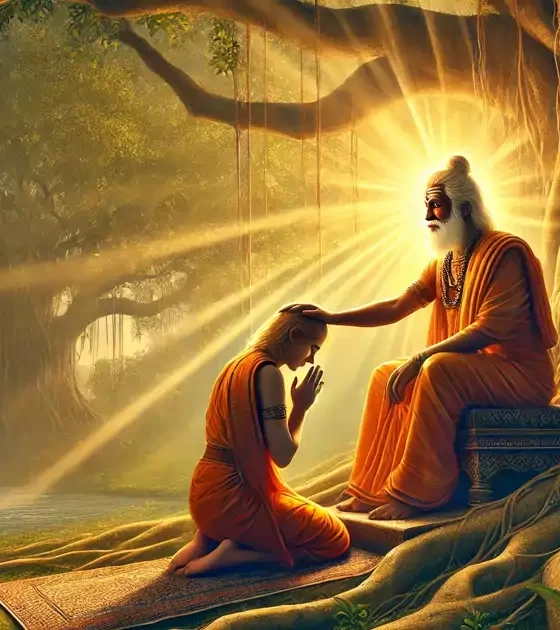
Some devotees might have doubts about what kind of ashram this is, what kind of pretense this is, where instead of Lord Shiva, one begins to bathe themselves. Such doubts are possible and can be there. However, this scripture also cites in the form of authenticated words that – Guru is Brahma, Guru is Vishnu, Guru is Lord Maheshwar. Not only is Shiva Maheshwar, which is his supreme name, but Brahma is also encompassed within the Guru.
The scripture says – Guru is the direct Supreme Brahman, salutations to that revered Guru.
This means that within the Guru, Brahma, Vishnu, and Mahesh are all encompassed. A disciple should have such a deep feeling that no other kind of sentiment arises in his heart. Disciples should ensure that while bathing the embodied Shiva, they see that Shiva within the Guru because all these gods are embedded within the Guru; only our eyes perceive the difference. Through those eyes, we view an object or person with various feelings. When Lord Rama arrives at the arena of Janakpur during Sita’s swayamvar, the different kings seated in the amphitheater see the two princes, Rama and his brother, the incarnation of Shesh, Lakshman, with different feelings. While indicating the varied emotions of those kings towards Lord Rama, Saint Tulsidas writes –
Jinh ke rahi bhavana jaisi, Prabhu moorat dekhi tinh taisi
As the feeling of each individual, so did they see the Lord’s form
Ramcharitmanas
The end of differences can only be achieved through a spiritual perspective. Just as Tulsidas sees his chosen deity Lord Rama and Mother Sita in the entire world and offers salutations with folded hands to everyone. The following couplet proves this –
Siyaramamay sab jag jani,
Knowing the whole world is imbued with Sita and Rama,
Karaun pranam jori jug pani
I bow with folded hands and water
Ramcharitmanas
God is one, but the number of people sitting around was in millions and billions. Among these countless people, each saw Lord Rama as per their own feelings. That’s the play of emotions.
Bhavo hi vidyate devah na pashane na mrnmayeh
The divine essence or presence is found in the spirit or consciousness,
not in stones or clay
That God, that deity, exists within emotions. He is not in stone, not in clay, not in gold, not in silver. Where is he? He is in emotions. When we perform bathing and worship with emotions, that God, manifesting as Shiva, blesses us with great boons. This has been mentioned in writings and by saints and scholars since ancient times. This body has performed the same work. This work is not against the scriptures, nor is it different from them. Otherwise, I would not get myself worshipped as Shiva. This work has been done according to the command, inspiration of Lord Shiva, and your emotions. Let’s all now together perform the aarti of Lord Shiva.
Ganga tarangaramanīya jatakalapam,
The Ganges, with her beautiful waves, adorns the matted locks of the divine,
Gauri nirantara vibhushita vama-bhagam
Gauri (Parvati) is continuously adorned on her left side
Shiva Tandava Stotram, Ravana
Narayanam priyamanangamadapahasam,
Worship Lord Vishvanatha, the beloved of Narayana, who dispels the pride of love’s delusion, And is the Lord of the city of Varanasi
Varanasi purapatim bhaja Vishvanatham
Vishwanathashtakam
After killing Ravana, when Lord Rama returned to Ayodhya, his coronation took place. This celebration was enjoyed by all the gods and goddesses, Gandharvas, Kinnaras, Ayodhyavasi (residents of Ayodhya), and the Vedas who came in the guise of sages. They prayed and praised the Lord. On this occasion, Lord Shiva was also present and started praising Shri Ram. In the end, he requested Shri Ranganath (another name for Lakshmi Narayana), who was seated on the divine throne as Lord Rama with Sita, the daughter of King Janaka:
Bar bar bar mangum Haripada dehum Shrirang,
Again and again, I ask for the feet of Lord Hari; bless me, O Shri Ranga,
Pada saroja anapayini bhakti sada satasanga
With unwavering devotion to your lotus feet and the constant company of the righteous
O my Narayana! O my Shri Ranganath! Whenever you ask, I will keep requesting this boon. The service of your feet, your devotion, and your numerous characters, I will keep describing them, keep associating with the righteous, and keep listening to your best words. This is the boon that Lord Shiva is asking from Lord Lakshmi Narayana, i.e., Sriranga. So come, now for two minutes we
Let’s meditate on Narayana. When Lord Shiva himself asks for it, then we should also ask. (Meditation on Narayana – Sriman Narayana Narayana)
According to the revered scriptures, according to the Vedas, Narayana is the supreme entity. Everyone has accepted this. Meera also says – I have become the maidservant of my Narayana, dancing with anklets on my feet. Saint Kabir also advocates the remembrance of the name Narayana. Tulsidas Ji also said –
Nila saroharuha syama, taruna aruna barija nayana,
The one with the dark-blue lotus-like complexion, whose eyes are like the youthful, reddish clouds,
Karau so mama ura dhama, sada shira sagara sayana
Resides in my heart, and who forever rests on the milky ocean
O Narayana! Reside in my heart along with Lakshmi. Every saint has accepted him as the supreme entity. All those who follow the path of renunciation, whether they say ‘Soham’ or ‘Brahmasmi’, when they meet each other, they will say nothing but ‘Namo Narayana’, because that is the supreme entity. There is no other entity apart from this. This supreme entity is also accepted by the great saint Baba Nanak Dev Ji in the Punjab region, who said that my Guru Maharaj gave me the teaching of the supreme entity and I found refuge in him. He gave me the same initiation. Baba’s decree is also found in the original version of Guru Granth Sahib.
Nam niranjan nir Narayana, rasna simrat papa bilayana
The pure and spotless name of Narayana,
Chanting it with the tongue dissolves all sins.
All visiting satsang lovers, devotees of God, devotees of the Guru!
Today, as every year, we are celebrating the worship and bathing festival of Lord Shiva. You have conducted the bathing and related rituals. We received three benefits from this bath – we got the proximity of the Guru, we got the touch of the Guru, and water was offered to the Lord. The Gopis were very clever. You are also doing the same work. The Gopis also used to say –
Chaliye sabhi chaliye vahan jahan base Brajaraja,
Let us all go to where the King of Braja (Krishna) resides,
Goras becata Hari milain, eka patha do kaj
There, by selling the nectar (Goras), we can meet Hari (Krishna), fulfilling both purposes on one path
Your visit to the ashram, the sight of the Lord, the proximity of the Guru, the vision of the Guru, the devotion to the Guru, in one path, you have accomplished many tasks.
The Supreme Soul, Sriman Narayana, has three attributes – Sattva, Rajas, and Tamas. Firstly, the Lord creates the universe. Then, when the dissolution happens, that is, when the creation ends, the Lord recreates the universe. For this task, he brings forth Brahma, Vishnu, and Mahesh from his Rajas, Sattva, and Tamas attributes, respectively. Within this system, he assigns the task of preservation to Vishnu, instructs Brahma to expand the creation, and …
Lord Shiva is told to destroy the creation. What should he destroy? Sorrows, sinners, and inauspicious deeds. And whoever performs supreme devotion to you, you will also have the power to grant their desired boon. Thus said Lord Sriman Narayana. So Lord Shiva is not someone else, he is not an ordinary power, he is not an ordinary deity. He is an aspect of Lord Sriman Narayana, tamoguna is one of his attributes, because when he begins his Tandava dance, tamoguna comes to him. Tandava dance means destruction. But he is also very compassionate, very generous, and very quickly pleased.
This method of worshipping Lord Shiva was not started by this ashram. There is evidence of it from a long time ago, from the time of Lord Sri Ramachandra. The Dvapara Yuga lasted eight hundred sixty-four thousand years, and before that was the reign of Rama. The Treta Yuga lasted 1.296 million years. And until the end of Samvat 2055, 5,099 years of Kali Yuga have passed. In this Shvetavaraha Kalpa, six Manvantaras have passed, and this Vaivasvata Manvantara’s 28th Kali Yuga is ongoing. That is, from the beginning of creation until now [until the end of Samvat 2055], 1 billion 972.949 million years have passed.
Lord Rama established Rameshwaram and granted a boon that whoever comes here and offers water, celebrates Shiva’s birth anniversary, observes Shivaratri, and offers Ganga water on these festivals, will attain salvation effortlessly, will obtain happiness effortlessly, will experience bliss effortlessly, and his sins will begin to be destroyed effortlessly. So, we did not start any new tradition in the ashram. The tradition of Kanwar is very old. Walking and carrying equal weight on both shoulders is called Kanwar. This was the name of the pilgrimage. The sufferings encountered during the pilgrimage destroy the sins accumulated over many lifetimes of the individual. All comforts and luxurious things create sins, and the sufferings endured in the name of God, in the name of the Guru, act as atonement for sins. So, this great work has been done by you all continuously.
Lord Shiva is definitely pleased with you. If Lord Shiva is not pleased, a person will not take up the Kanwar. Oh, who will leave luxury and go out in this rain or cold or on sharp stones and pebbles? This is an age of materialism, but it is the grace of God. Without the grace of Shiva,
Who will gather in this dense jungle? It is only his grace, his blessing that you and we all gather together to discuss matters related to him.
Satsang does not happen without fortune, and fortune is made when the Lord bestows his grace. Lord Shiva, the easily pleased, is already pleased with you. When you bathed a physical body, considering it as Shiva, or meditating on Shiva, then that physical Shiva is saying that we are already pleased with you. We did not tell you this to psychologically influence you, to praise you, or to boast. Whichever group went to take the Kanwar, whether two or four, on returning, they became six. There was a big obstacle for one group. Then one or two Kanwariyas swore, “Baba! Help us this time, we will not come again.” But I have such hope that they will go again and again. After that, those problems got resolved automatically. I believe that the group that lagged behind has also come. If there is any such Kanwariya, then raise your hand. He laughed, look, he is standing (pointing out). He was defeated, tired, troubled, and had sworn that he would not go, but Baba brought him, and he
He will go repeatedly, this is also a guarantee. If this were not true, then, dear ones, think about it: some souls can be taught the lesson of deception or trickery, but not every person. This confirms that the God who is also the Guru is with each Kanwariya. We acknowledge that you have suffered, you came on foot, but ask that Guru who was with you. When you slept, he stayed awake. When a devotee suffers, God is not happy. When a Guru’s devotee suffers, the Guru does not sleep peacefully, this is true. If it were not so, the Guru’s position would be tainted. God Shiva does not celebrate. So, Lord Shiva is pleased with you, he is blessing you, all of you.
We contemplate so much on Lord Shiva, we meditate so much, if we obey Lord Shiva even a little, it is a very good thing. A true devotee is the one who considers the command as great – Guror Ajnar Shriyasi. Accept the Guru’s command as greater than the earth, greater than the sky, and greater than all the deities. That is, the God for whom we are working so hard, making efforts, worshipping, chanting ‘Om Namah Shivaya’, and worshipping Lord Shiva, it is also necessary for us to accept some of his commands.
It is the same. If you serve your parents daily, give them oil massages, and serve them in many ways but disobey a little command or hurt them slightly while applying oil, will your parents be very happy with you? They won’t. Similarly, we worship Lord Shiva, perform rituals, etc., but if we do not follow his words, we will not receive the full benefit. Because serving according to our own will and in our own way does not yield special benefits. It is not that serving according to the mind does not yield any fruit, but it yields fruit like that which was received by Ravana, Kumbhakarna, Jarasandha, Shishupala, Shumbha-Nishumbha, Meghnath.
Shiva’s command is to become a devotee of the Guru and God. I will automatically continue to bless you. Such are his words. Parvati ji asked, “Lord! You keep doing something all twenty-four hours. I do not know what you do? But you remain silent, your eyes are closed, what do you do?” Lord Shiva replied –
Ram Rameti Rameti Rame Rame manoramae,
Chanting “Ram Ram” and “Ram Ram” with pleasure and devotion,
Sahasra nama tatulyam Ram nama varanane
The name of Ram is equal to a thousand names, O beautiful-faced one
Vishnu Sahasranama – Phalasruti
Oh Parvati! I constantly remember the Supreme Being Shri Ram, meditate on him, and watch his divine plays. Parvati ji says that you were just saying a little while ago that you are a devotee of Shri Narayan. Lord Shiva replied, “Oh Sati! Narayan, Ram, and Krishna are not different from each other; because it is Lord Narayan who takes various forms to establish righteousness, to bring happiness to good men, and to destroy demons.
Vishnave Prabhavishnave: It is the same Lord Mahavishnu Narayan who comes, there is no difference. Therefore, I keep remembering him and do everything by his grace. Therefore, my devotees should also worship him and receive my grace, this is what he says.
I always tell you people to remember Lord Shiva. He is the first to tell us to give us peace and not only does he say it, but he also shows us in a tangible form, showing us, “Brothers! My devotees! My servants! Look at me, look at my house, look at my family. I have two sons, Ganesh and Kartikeya. I have a wife and there is me. Besides that, each of us has a vehicle. One has a mouse as a vehicle, one has a peacock as a vehicle. My vehicle is a bull and Parvati
belongs to the lion. We all have our rides and so do we. Look, Parvati Ji is Vishvasundari, she is the queen of the three worlds. Tripurasundari is her name and look at me. I am equally ugly, I wear a deerskin, apply ash, wear a tripund, and wrap a snake around my neck, hold a skull. Think that Lord Ganesh Maharaj’s trunk is hanging and Swami Kartikeya has many heads, but they do not fight each other. You first see me. The Ganga flows from my hair and my eyes are like fire, but the Ganga does not extinguish the fire. I am wearing a tiger skin, a snake is lying around my neck and the Ganga is flowing above it. This is the nectar flowing. Poison does not destroy the nectar. There is no contradiction, no fight. And see, my vehicle is a bull, Parvati’s vehicle is a lion. But the lion never leaves the bull. Although it is a dear prey! But both do not glare at each other, they sit in their places. The snake, which quickly eats the rats, does not look at Ganesh Ji’s vehicle, the rat. My decoration is a snake, but the snakes coiled around my body do not hiss. Swami Kartikeya’s vehicle is a peacock. By nature, the peacock never leaves the snake, instantly eats them. But the peacock never eats the snake, everyone remains peaceful in their own place.
Only he can remain established who is unwaveringly devoted and trusts in God and the Guru. So first of all, the importance of trust is taught to us by Lord Shiva. Tulsidas Ji also says in the worship of Lord Shiva that “O Lord! Grant us both faith and peace because you are the embodiment of faith and trust.” Therefore, he first commands us to have faith and trust. If we do not possess faith and trust, we will gain very little from the worship of Lord Shiva, hardly anything at all. On the contrary, we may receive the opposite result, as Ravana did. Therefore, faith and trust are his primary commands, his first instruction, which we must accept. After accepting it, Guru Maharaj will bestow his grace, and when Guru bestows grace, why won’t Shiva? Of course, he will.
In favor of the Guru, Lord Shiva has always walked, never opposing. Kaka Bhushundi Ji narrated the story of his previous life that he was a Shudra. Once, in that same Shudra body, he chanted Shiva’s name in the temple.
He remained there. When he saw the Guru approaching, he neither greeted him nor stood up. He did not show respect. Though the Guru said nothing, Mahesh Ji could not bear this disrespect towards the Guru. Immediately, a celestial voice proclaimed, “O miserable one! You have insulted the Guru! You sat there like a python, so become a snake.” Now consider how much Lord Shiva sides with the Guru. The Guru was not angry with the disciple, thinking that it was no big deal; he was chanting, sitting there, what’s the harm. Bowing to him would not fill our stomachs, and if he does not bow to us, we would not become paupers, there is no harm. But Lord Shiva could not tolerate it. Thus, you learned people should consider how much Lord Shiva is attached to protecting the Guru’s honor and the Guru’s word. He said that if I do not curse, then the glory of the path of Shruti will be lost, it will be destroyed, because the Guru’s word is extremely great. That is why Shiva was also agitated. So, Guru Seva (service to the Guru), Guru Bhava (devotion to the Guru) means that the faith and trust that Lord Shiva has taught us, by keeping faith and trust in it, and by following the inspiration and orders of the Guru, Lord Shiva will always be pleased with you.
Some people say that we will only know that Lord Shiva is pleased when he gives us something. This means that we do not have any wisdom because asking is a very small thing. It can also happen that a person asks for something that later leads him to hell. Asking can also cause a person to fall into such luxury that he later becomes a demon from a human, as you see nowadays that when the Lord gives more and more in his grace, such people abandon humanity. They do all sorts of things, they resort to violence. This is something you have to think about. I do not call them sinners. I call them the beloved children of God. They have received more pampering, which is why they have spoiled. The spoiled people in our society may be more pampered by Shiva. But you consider the end of these pampered ones. Therefore, we should not be pampered by God, but become obedient to him. Remain in his command, accept his command. As he says, in that, we achieve complete happiness. We should not become askers. In small things, we end our penance. In small things, we lose our faith. In small things, we
We lose our faith. This causes us great harm. Therefore, whatever is the will of the Lord, the will of the Guru, we should be content with that.
The Guru and God are not unjust, not sinners. They cannot be happy seeing you sad. They will be happy seeing you happy. Therefore, they strive to bring you happiness, they keep at it. Why should we ask and demean ourselves? Therefore, Guru’s command, God’s command, Shiva’s command, Rama’s command, Krishna’s command, Narayana’s command, Mother’s command, whatever it is, we should remain in their command and atone for our past wrongdoings. We should keep thinking that these are the sins of our previous lives, we have been sinning for many lifetimes, now we have taken refuge here and accepted the Lord, we have started coming to Satsang, and because of this, our sins are being completely destroyed. It might have consumed us more, but it was saved. We should think this way. Truly, the greatness of Satsang is very remarkable, very strange, there is no doubt about it. It even saves us from the danger of life.
Just now, our disciple Prem Kumar Verma, who must have come here, had work in Mathura but we brought him here briefly
I stopped you for the Satsang and after stopping, I said not to go to Mathura now, go in the evening. Now I am explaining the effect of the Satsang. In conversation, we spent three hours. Their car was parked in the parikrama (circumambulation) of the ashram and where you are sitting, blasting was going on. At that moment, a heavy stone fell on the driver’s seat of their car. Think about it. Whoever was sitting in the car would have certainly been in an accident. I said, Mr. Verma! You would have certainly had an accident in Kosi, no one could have stopped it. But you were saved due to the glory of the Satsang. The Satsang has a special glory. I am not showing my ego, I am showing the grace of that Supreme Being that if His mercy wasn’t there, our lives could have been lost, our situation could have been worse. Accept that even if we are sad now, we could have been a thousand times sadder. But the Lord is showing grace, Lord Shiva is showing grace, believe this.
On today’s Shiva festival, I am repeatedly saying that Lord Shiva is pleased with you, there is no doubt in this. Do not be confused about this at all, and to please Lord Shiva further, have faith and
Keep faith and serve the Guru. God will never be away from you. Let us not be in the habit of asking for boons because, by mistake, we might ask for something harmful. Like Kumbhakarna asked for the boon of sleep. Was that really a boon? But it occurred to him, as he was very tired, that he would sleep more. He said, I will sleep. God said, ‘So be it’. That poor guy would sleep for six months straight. He would wake up for one day, eat, drink, and go back to sleep. Did the boon turn into a curse or not? Ravana also asked for a thoughtless boon, but did it not become a curse for Ravana? I understand that it was no longer a boon. His family was destroyed. He was disgraced. Even today, you burn his effigy. Whose effigy? Of a great Shiva devotee, not an ordinary devotee. You burn the effigy of a supreme devotee, a faithful devotee. Why? Because he asked God for a wrong boon. We do not even know how to ask. That is the problem. We will ask only for selfish things and nothing else. Like a neighbor asked that my neighbor’s one eye be destroyed, so Shiva said that whatever you ask for others, you will get double that boon. Thus, both his eyes were destroyed, and he fell into a well.
He got it. This is the boon, look at it! And this is our asking! We don’t even know how to ask for boons. It’s better that we don’t ask for boons at all. God himself will keep giving to us. We should keep faith and trust in him and keep enjoying bliss, keep taking joy, and also give joy to others. In this way, we will do both tasks. So, on this auspicious day, along with blessings, we conclude this topic here.
Narayana. Narayana. Narayana.
Summary
In this discourse delivered on the occasion of Shivratri in 1999, the speaker reflects on the profound significance of Lord Shiva, known by many names such as Ashutosh and Shankar. The essence of Shiva lies in his ability to bring welfare and blessings to his devotees. The discourse emphasizes the importance of seeing the divine in the Guru, as the Guru embodies Brahma, Vishnu, and Shiva. It is through this perspective that devotees can truly connect with the divine during rituals like bathing the Guru, which symbolizes the worship of Shiva himself.
The speaker also underscores the importance of unwavering faith and trust in the Guru and God. Drawing from various scriptures and examples, the speaker illustrates that true devotion lies in obedience to divine commands rather than in asking for personal boons. By aligning oneself with the divine will and serving the Guru with dedication, one can attain peace, happiness, and spiritual growth. The discourse concludes with a call to embrace the blessings of Shiva and to avoid the pitfalls of asking for selfish or misguided desires, as exemplified by figures like Ravana and Kumbhakarna.
Important Points
- Lord Shiva’s Many Forms: Shiva is known by many names, each reflecting his various attributes, with the core essence being welfare and knowledge.
- Guru as Divine Embodiment: The Guru embodies Brahma, Vishnu, and Shiva, and should be revered as the direct representation of the divine.
- Faith and Trust: Devotees must cultivate unwavering faith and trust in the Guru and God, which is essential for spiritual progress.
- Ritual Significance: Bathing the Guru during Shivratri symbolizes the worship of Lord Shiva and is rooted in ancient traditions.
- Obedience to Divine Commands: True devotion lies in following the commands of the Guru and God, rather than asking for personal boons.
- Dangers of Asking for Boons: Misguided desires can lead to negative consequences, as seen in the examples of Ravana and Kumbhakarna.
- Unity in the Divine Family: Shiva’s family, despite their diverse and often contradictory attributes, lives in harmony, teaching the importance of faith and devotion.
- Historical Tradition: The tradition of worshipping Shiva through rituals like Kanwar is ancient and continues to hold deep spiritual significance.
- Satsang’s Protective Power: The discourse highlights the protective power of Satsang and the grace it bestows on devotees.
- Avoiding Misguided Desires: The speaker advises against asking for boons, as the divine knows what is best for the devotee’s spiritual growth.